
A Drill Press With History
These posts are written by me, not AI. Unless otherwise stated, all pictures were taken by me as well. Please enjoy.
If there is one thing that I am good at, it is striking up conversation with the greatest generation. I’m not much of a social guy, but when I see an opportunity to talk to an old man, that social awkwardness goes disappears. I don’t plan it and I don’t force it, it just happens.
My wife knows the routine. Once one of these conversations starts, the day’s plans slide an hour to the right. We’re not leaving anytime soon.
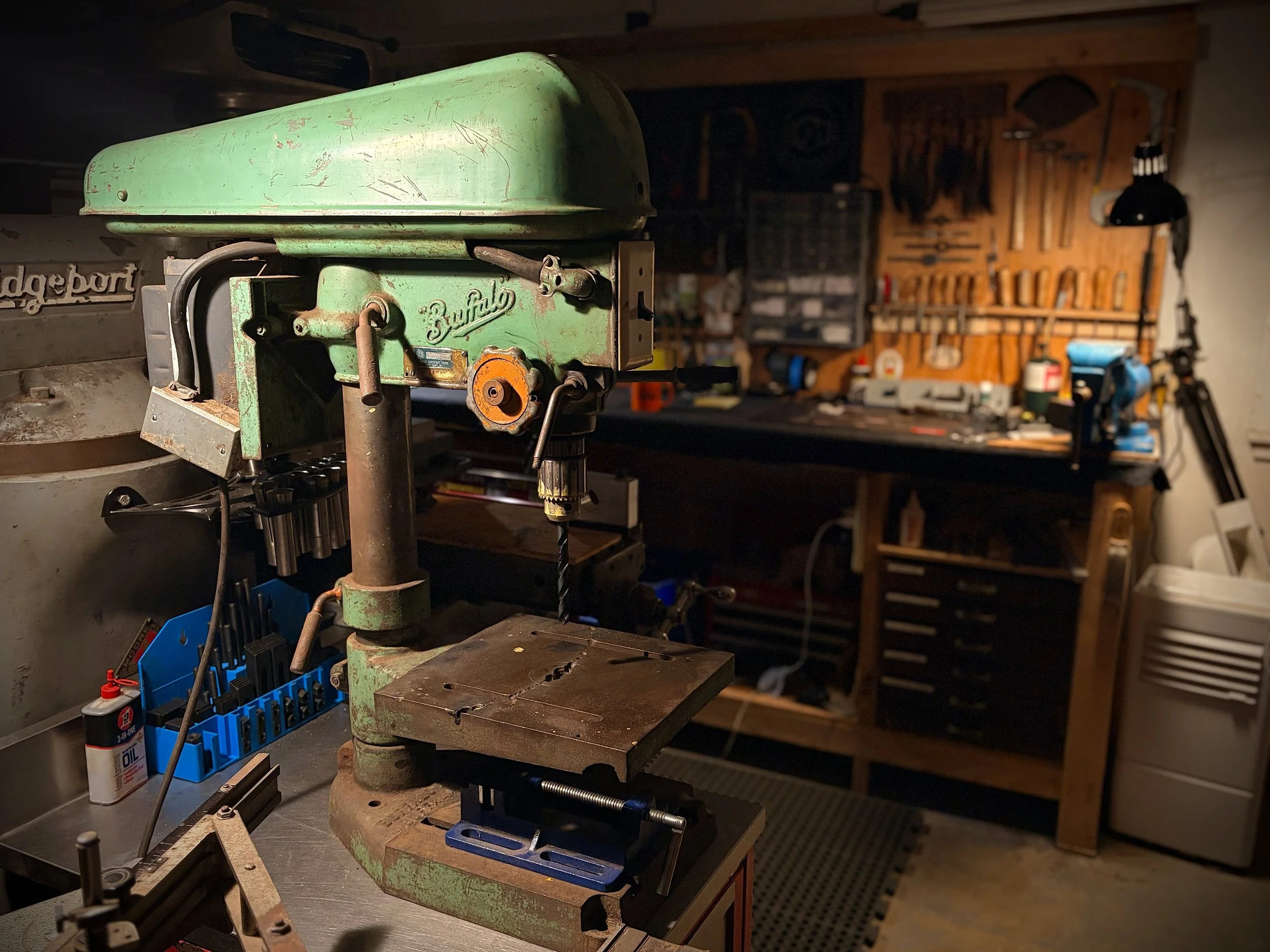
That’s exactly how I ended up with the coolest piece of equipment in my shop: a Buffalo Forge No. 15 drill press.
The No. 15 is a legend among home machinists and tinkerers, but this one is especially unique. I originally answered a Facebook Marketplace ad for a wooden cabinet that I planned to turn into a rust bluing cabinet. While loading it up, I got talking with the seller. He was a genuinely happy guy and clearly at a point in life where he was letting go of things. He was selling off his tools and likely moving into a nursing home soon.
He asked if I needed this or wanted that. Most of it didn’t interest me.
Then he mentioned his garage.
A man’s garage is sacred ground. It’s where work gets done and he was excited to show it to me. He asked if I needed a drill press. I didn’t, really, but I said I’d like to take a look.
The moment he opened the door, I knew it was an old Buffalo Forge. They were built differently back then. Everything exposed. No sheet metal hiding internals in the name of cost savings. There’s a certain beauty to machines like that.
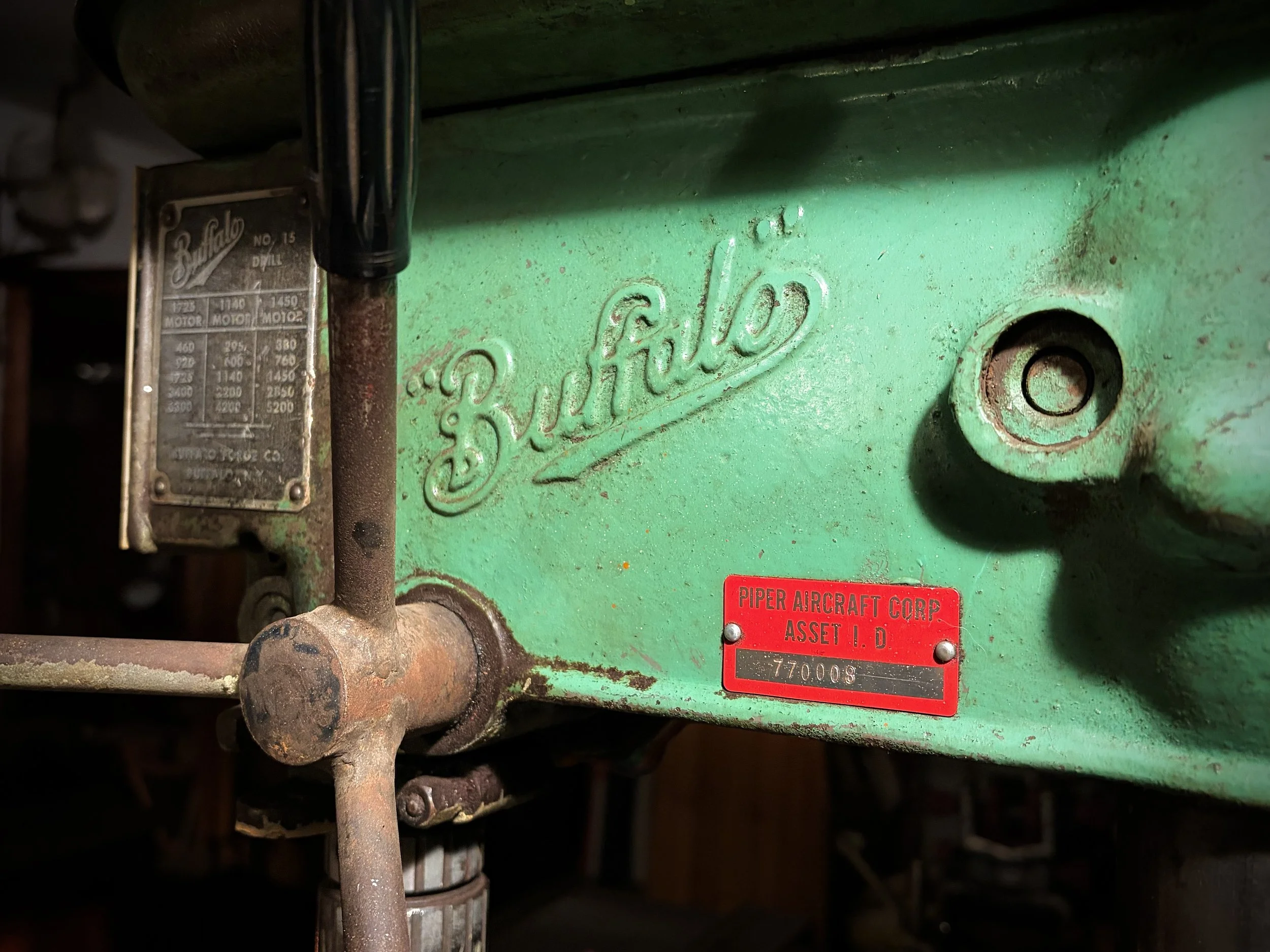
But this wasn’t just any Buffalo. I’ve looked at hundreds of old machines over the years as I’ve slowly pieced my shop together, so I know what catches my eye. As I stepped closer, past the grime and grease, I saw a manufacturer’s tag that stopped me cold:
“Piper Aircraft Corp.”
My mind immediately went to Lock Haven and the possibility that this drill press had once sat on an assembly line building Piper Super Cubs. After nearly seven years as an aviator for Uncle Sam and with a long family line of aviators, I had to have it.
He told me he still had some work to do with the machine but said he’d put my name on it. A few months later, toward the end of summer, I reached back out. He was ready to let it go.
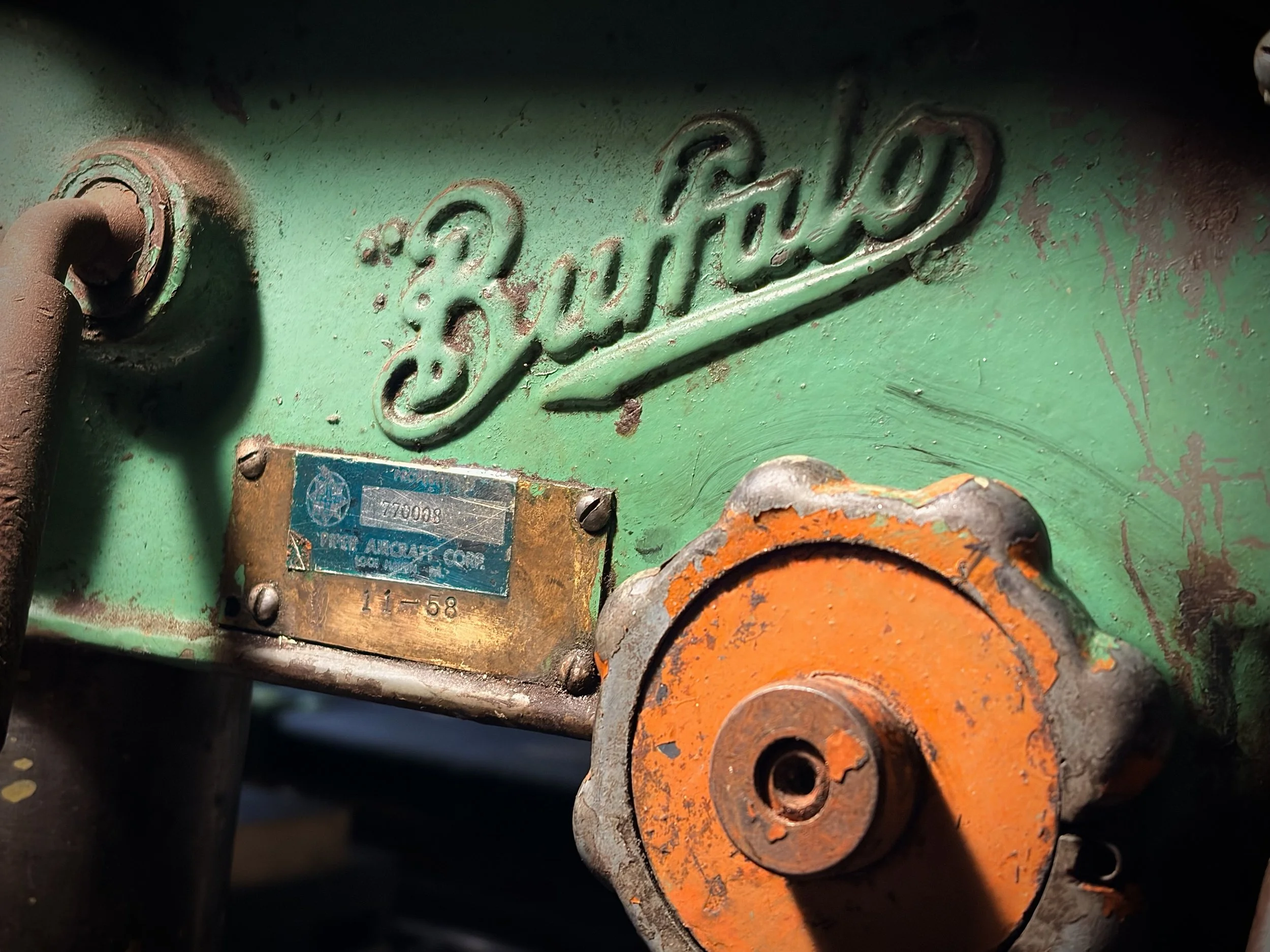
This Buffalo No. 15 was built in Buffalo, New York, in November of 1958. It’s a tabletop model weighing roughly 100 pounds of cast iron. Five speeds. Quiet and smooth at every setting. On both sides are manufacturer’s tags reading:
“Property of Piper Aircraft Corp.
Asset I.D. 770008
Lock Haven, PA.”
Back in the glory days of American manufacturing, these tags were common. They probably served plenty of practical purposes at the time, but today they offer a glimpse into a machine’s history. It’s safe to assume this drill press was purchased new by Piper Aircraft. Buffalo Forge was known for building production-quality machines, and Piper wasn’t cutting corners.
The Piper Aviation Company began in Bradford, Pennsylvania—just 30 minutes north of me. After a fire destroyed the Bradford facility in 1937, production moved to Lock Haven, where it continued to grow as the company expanded.
In 1958, when this drill press likely joined the company, Piper was manufacturing the PA-18 Super Cub, PA-22 Tri-Pacer, PA-24 Comanche, and PA-23 Apache. While each of those airplanes holds significance to someone, the Super Cub is the one that captures my attention.
Then and now, it’s the backbone of the backcountry bush pilot, an airplane known for taking off and landing where nothing else can. As a die-hard hunter, I’ve spent more than a few nights imagining a cramped ride in the back of one on the way into a sheep hunt, rifle and gear stuffed wherever they’ll fit.
During the decade or so after this drill press entered service, the Super Cub accounted for roughly 20 percent of Piper’s production at the Lock Haven plant, somewhere in the neighborhood of 300 to 350 aircraft per year. I have no way of proving it, but I like to think this drill press had a hand in that work. I don’t know when it left Piper or under what circumstances, but between 1958 and today there’s a wide gap that can only be filled by imagination.
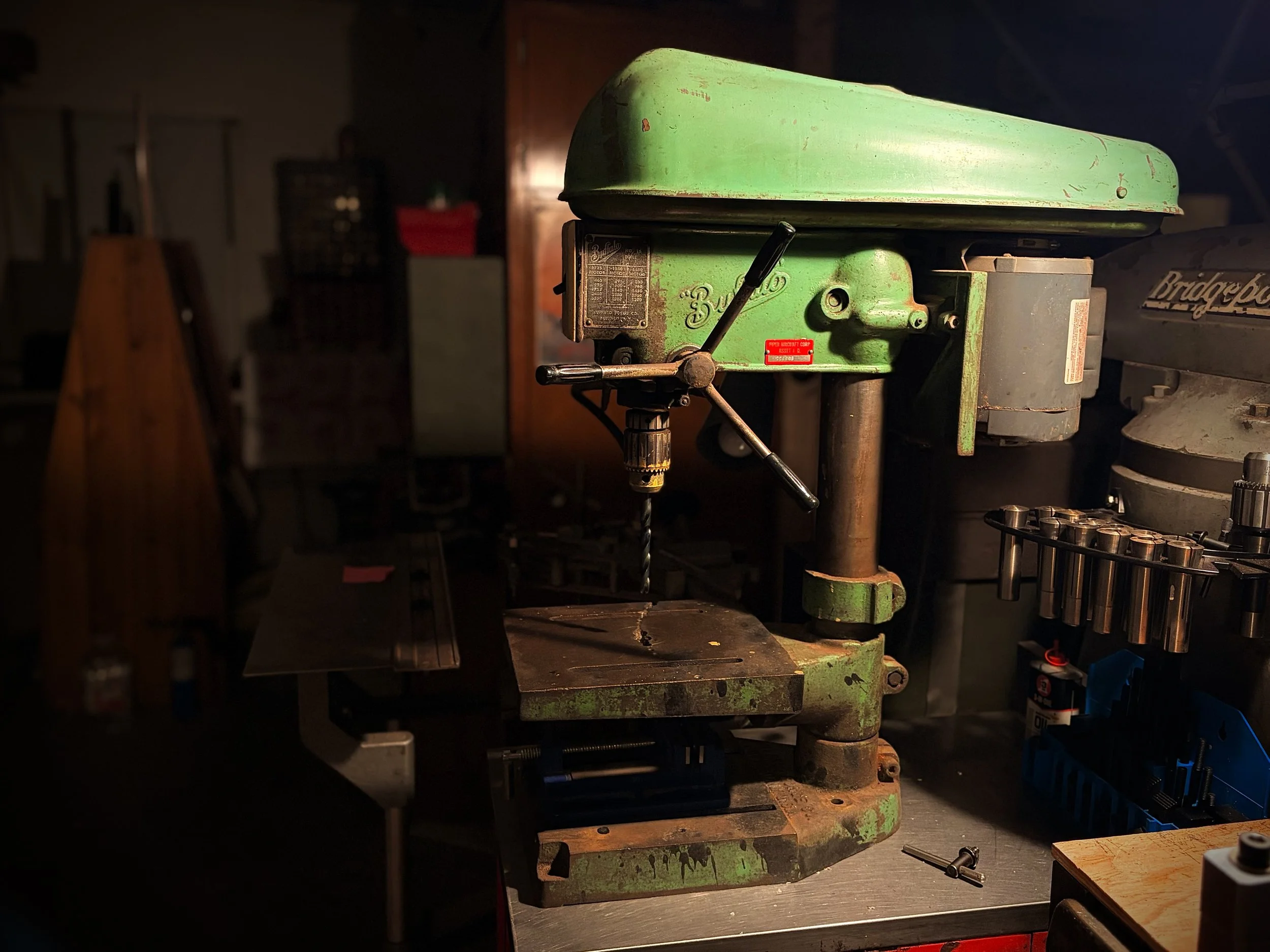
The idea that a rifle I build for a customer using this machine might someday ride in the cargo compartment, or strapped to the outside of a Super Cub built during the same era makes me smile. I’ll never really know, but it’s a good thought. And you can be damn sure I’ll be checking the serial number of every Piper I get close enough to, just in case.
I probably overpaid a little for the drill press, but I don’t think I’ll ever wish I had the extra cash instead of the old Buffalo. Once it was back in my growing shop, I tore it apart, cleaned it thoroughly, re-greased what needed it, and knocked down the surface rust that had started to creep in. In the near future, I plan to rebuild it completely—new bearings pressed in, everything brought back as close to new as reasonably possible.
If it’s cared for properly, this machine will outlast me. And if I do my part, it’ll serve the next guy just as well as it served Piper Aircraft nearly seventy years ago.
Written by: Kurt Martonik
Kurt is a Gunsmith, Reloader, Hunter, and Outdoorsman. He grew up in Elk County, Pennsylvania, where he became obsessed with the world of firearms. Following high school, Kurt enlisted in the United States Air Force as a Boom Operator, where he eventually rose to the position of Instructor. After his military service, he attended the Colorado School of Trades(CST) in Lakewood, CO for gunsmithing. Following graduation, he accepted a job at C. Sharps Arms in Montana, where he worked as a full time stockmaker and gunsmith. He now owns and operates Highland Custom LLC. See full bio here.
