
These posts are written by me, not AI. Unless otherwise stated, all pictures were taken by me as well. Please enjoy.
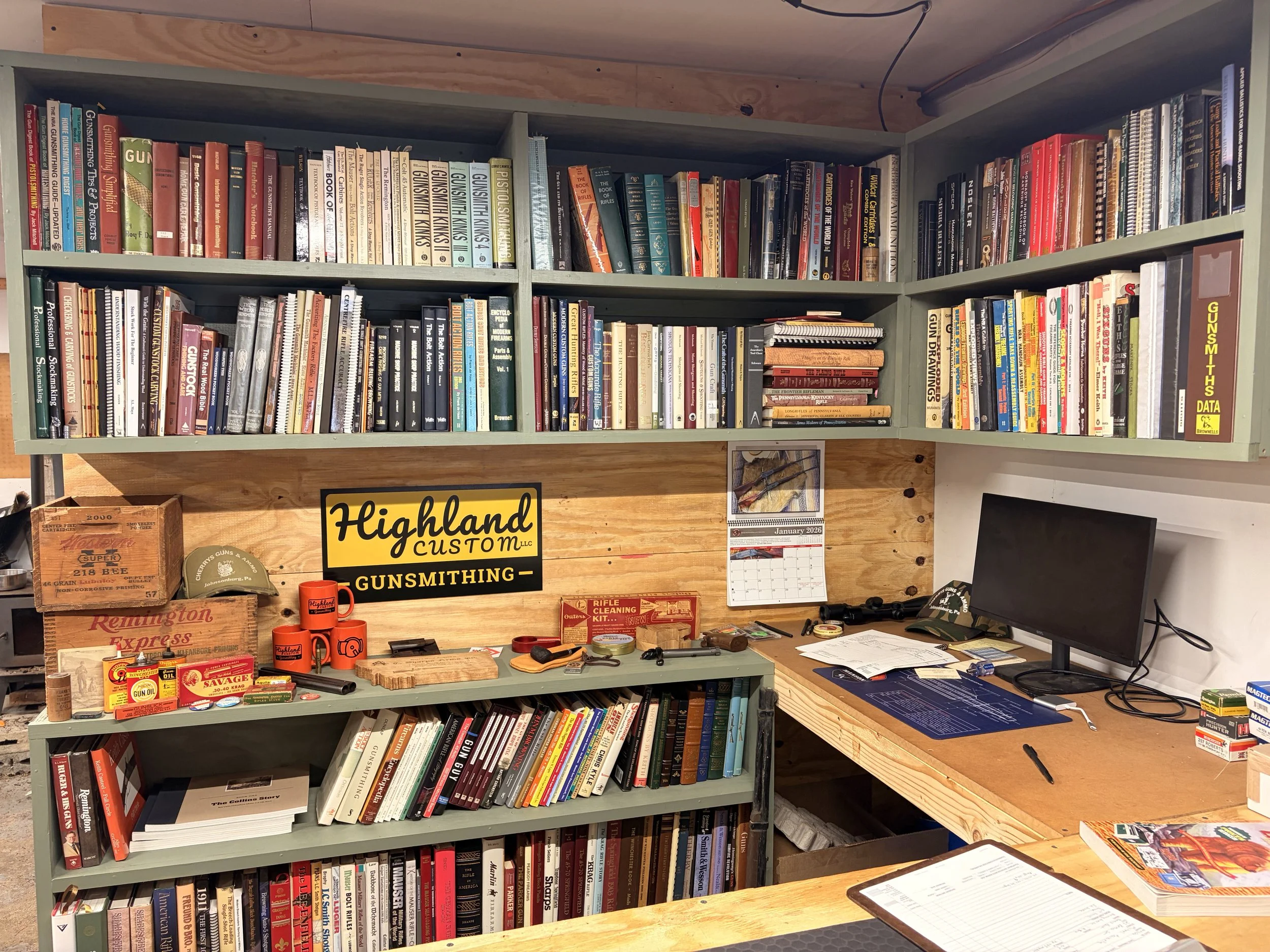
Every serious gunsmith should have a bookshelf within arm’s reach of the bench. Not for decoration. Not for nostalgia. For the survival of the trade. Continuing your education as a gunsmith is not optional. It never ends. A physical library is one of the most practical ways to do that. It gives you answers immediately, without depending on internet searches, algorithms, or whether a video still exists tomorrow. At this point, I can walk to my shelves and find answers to probably 90% of the questions I run into. That didn’t happen by accident.
Some of the links on this site are affiliate links, which means I may earn a small commission if you choose to make a purchase—at no additional cost to you. This has no impact on what I write about or the opinions I share, as everything here is based on real use and time in the field. I only include links when I believe they genuinely add value or help the reader, and I won’t recommend or link to anything I wouldn’t use myself.
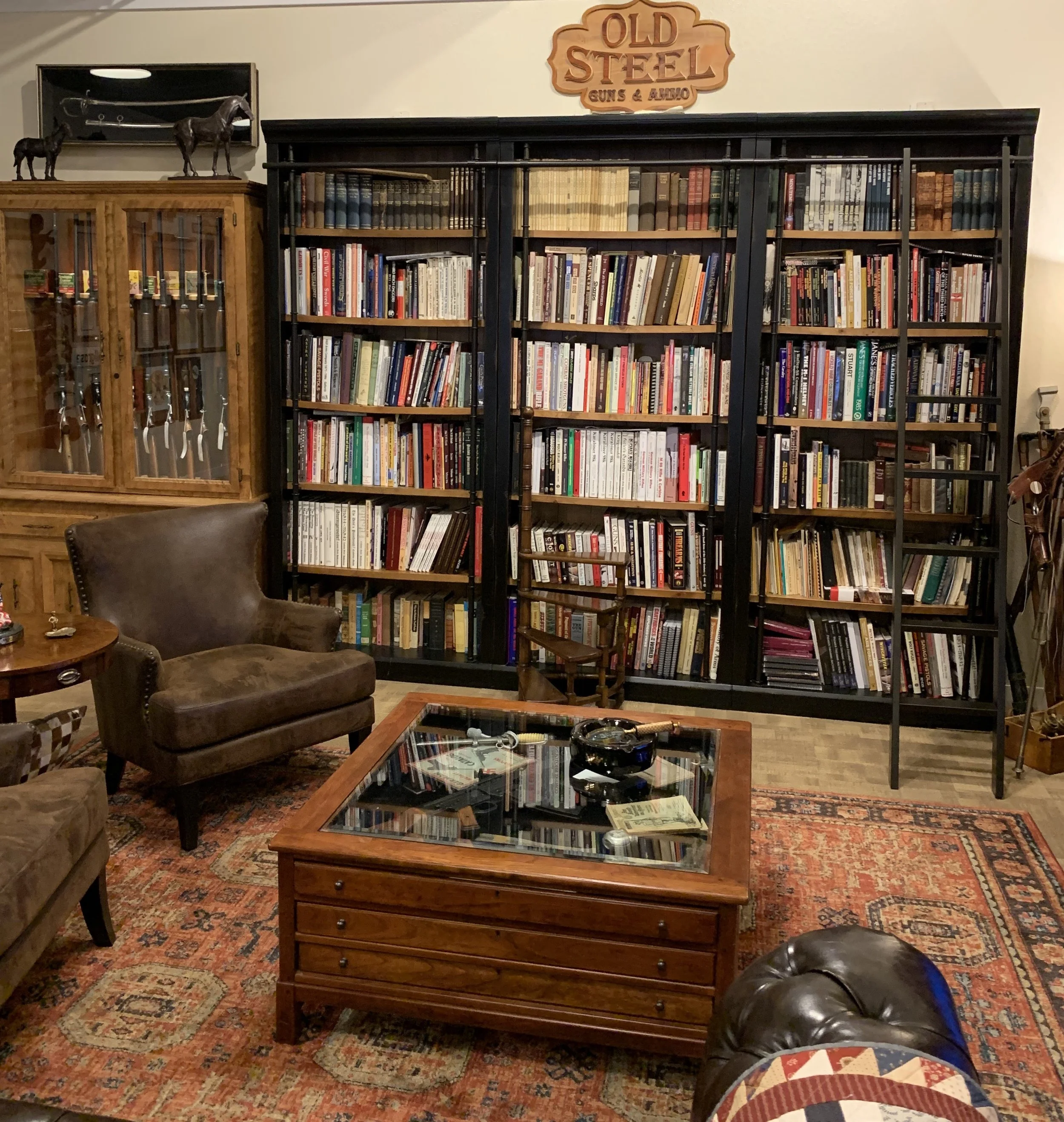
Half of Old Steel Gun’s library when I worked there many years ago
Where It Started
I remember the exact afternoon in 2014 when I decided I would become a gunsmith. I was sitting in my room at McGuire AFB. I had five years left on my Air Force commitment. No shop. No tools. No mentor. Just a decision. So I asked myself: what can I do today that moves me toward that future? That afternoon I ordered the Brownells Gunsmith Kinks series and enrolled in Penn State World Campus for Business. It wasn’t glamorous, but it was forward progress. I didn’t have a garage to work in, so procedures were hard to visualize. But I could read. I could study. I could build a foundation.
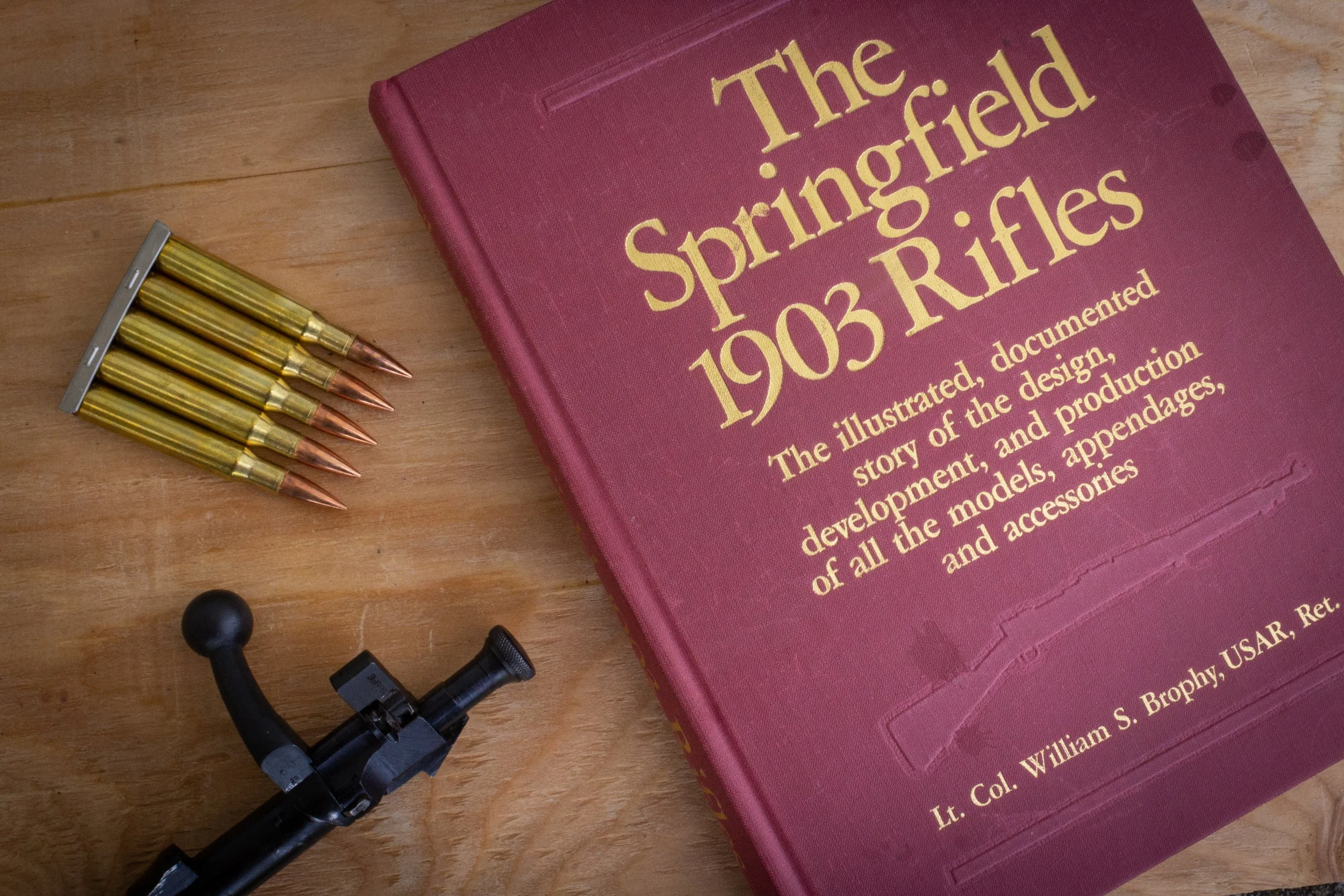
As I finished one book, I put it on the shelf and ordered another. Early on, I focused on history — manufacturers, design evolution, the trade itself. I didn’t yet understand how valuable those details would become.
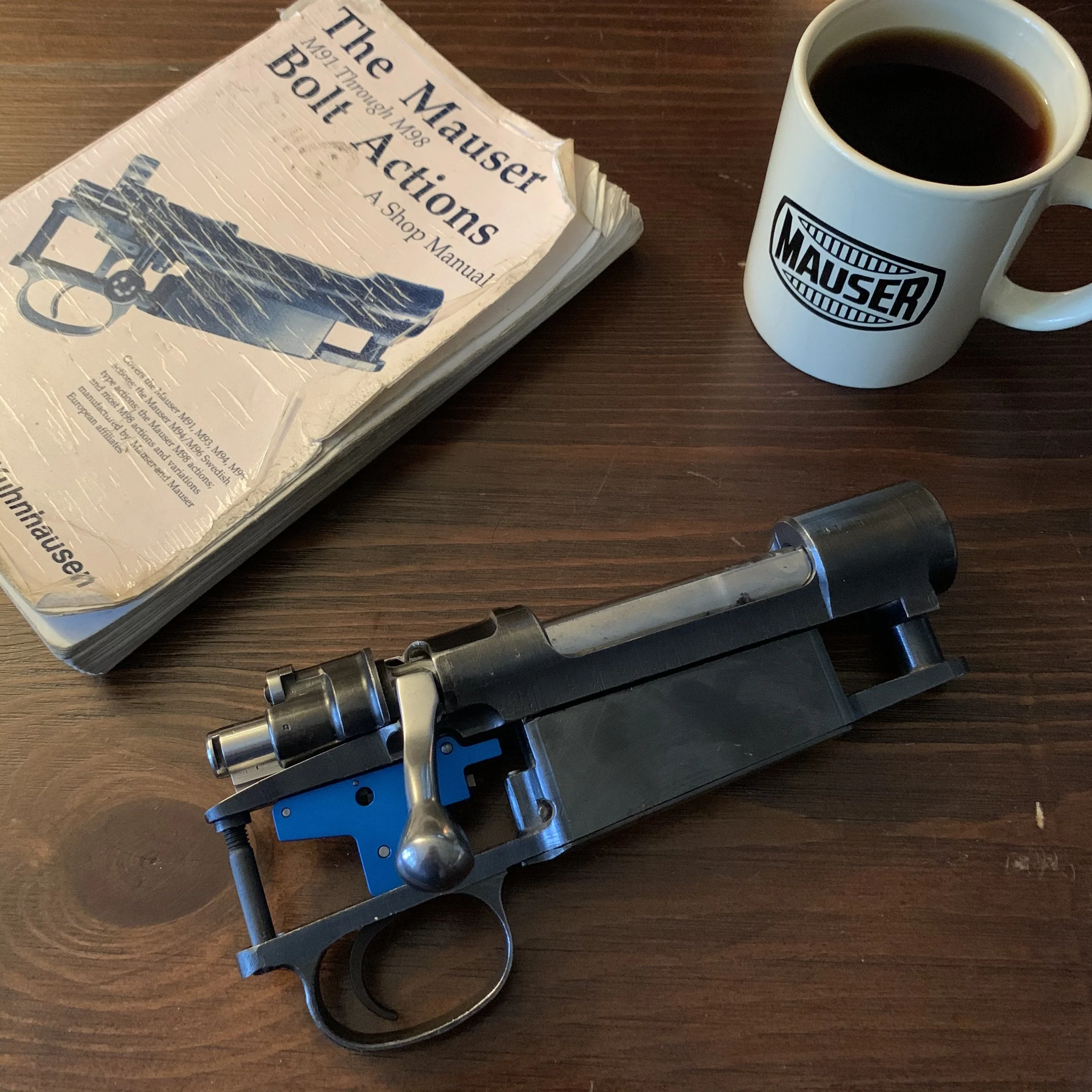
What most mornings look like to me, gun parts on the table are the norm, just ask my wife.
Seeing What Was Possible
When I showed up to the Colorado School of Trades in 2019, the first thing that struck me was the library as you walked in. Shelf after shelf of paper gold. Worn spines. Decades of accumulated knowledge sitting quietly in one room. It was massive. And it set a standard in my mind.
As students, we were allowed to check books in and out. The course was 14 months, nowhere near enough time to read everything. So every few days I would take a different one home, flip through it, mark what was valuable, and decide if it was worth owning. If it was, I make note of it, or ordered it and added it to my shelf(If I could afford it).
Around that same time, I started working at Old Steel Historical Firearms. That experience deserves its own story someday. But one of the things that left a mark on me was Gio’s library. Customers could grab a cup of coffee and sit down with collector reference books while examining the firearms they were considering. Collector books aren’t just for collectors. They document part variations, serial number changes, manufacturer procedures, and subtle details that separate “correct” from “almost correct.” They prevent mistakes. They preserve history.
That realization shifted the way I built my own library. It wasn’t just about learning how to do something. It was about understanding why it was done that way in the first place.
The Weight of Books
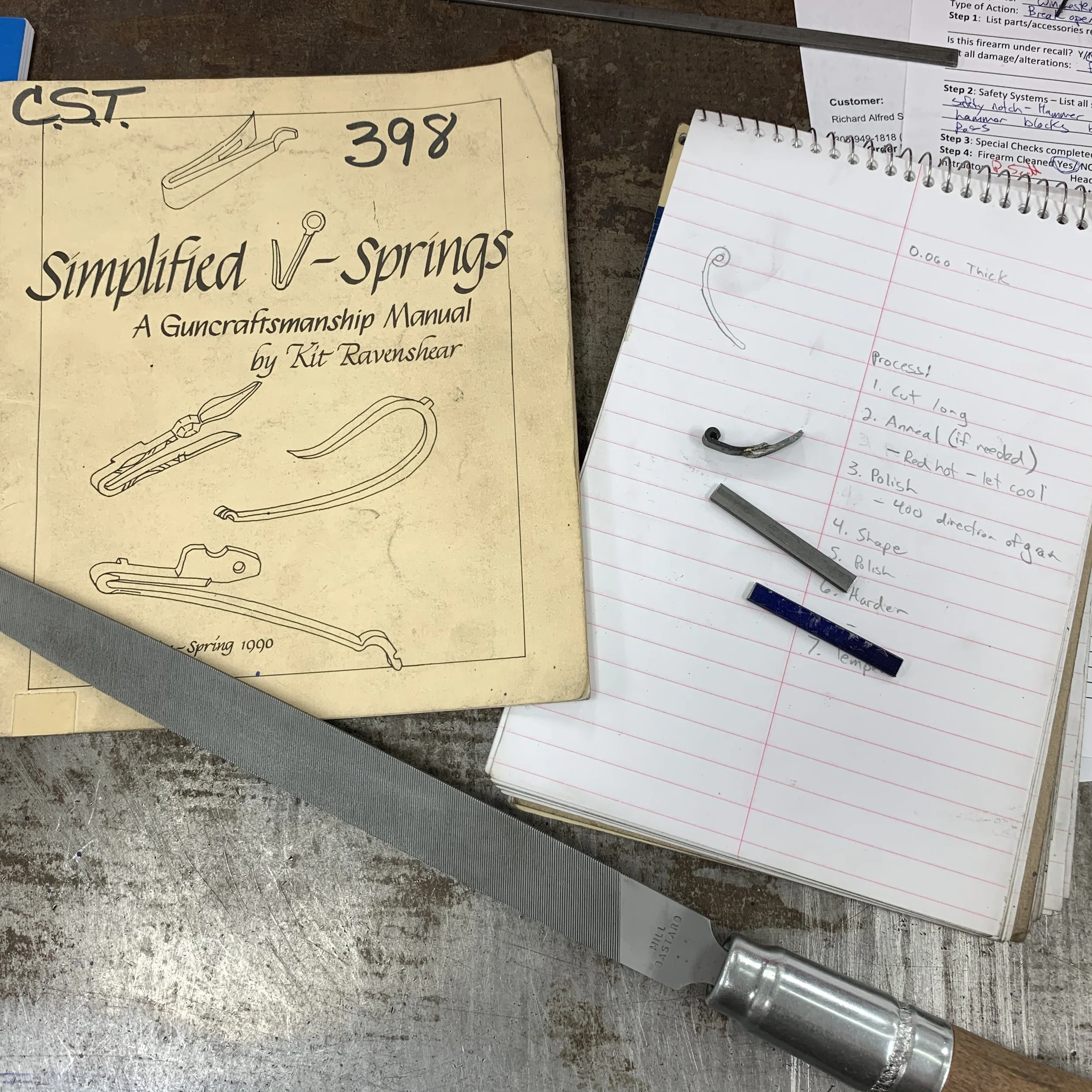
My library grew steadily. And it got heavier. Every move meant more boxes labeled “Books.” Colorado. Montana. Then back home to Pennsylvania. They took up more space every time. But they also became more specialized.
As I learned the trade, the books became more focused; color case hardening, rust bluing, bolt action rifle design, heat treatment, historical production practices. Many of them were printed in small numbers decades ago. Some are getting harder to find every year.
Continued Education Never Stops
Gunsmithing school gives you a foundation. It does not give you mastery. An apprenticeship builds on that. But even then, you are responsible for continuing your own education. I still revisit books I read years ago. Sometimes you don’t fully understand what an author is explaining until you’ve made enough mistakes to appreciate it.
I once had a rust bluing job that simply would not turn out correctly. Everything looked right. Everything felt right. But the results weren’t there. After fighting it longer than I should have, I grabbed an old book written in the 1930s and walked through the troubleshooting section step by step. The issue became clear almost immediately.
Another example: I purchased a beautiful M1908 Mannlicher Schoenauer that was missing the rear set trigger. Finding one can easily run $500 or more. So I decided to make it. Having another example to measure made dimensions straightforward. But the real questions were different: What steel should I use? How should it be heat treated? How hard is too hard for a rifle built over a century ago? If you make it too hard, you risk battering the original components and creating a larger problem.
By referencing The Modern Gunsmith by Howe, I was able to determine the appropriate steel and that case hardening was the correct treatment for that application.
Digital Knowledge Is Fragile
Whether we like it or not, digital platforms are not permanent archives. Videos disappear. Accounts are flagged. Policies change without explanation. Once upon a time, YouTube was full of extremely detailed firearms content. Much of it is gone. Even small channels quietly lose videos without clear justification. I’ve had it happen to my own dozens of times.
While there are still a lot of firearms videos on Youtube, their content restrictions silently take down videos daily. My small youtube channel often loses one video a week. They tell you that you violated Youtube’s policies, yet don’t tell you how. Who knows what the next 5 year will look like for gun content.
If you think I am being dramatic, here is a link to a video I posted about my library. There are no guns in the video, only books. Youtube restricted it as “Not suitable for all advertisers.” Which in my experience, means it will likely be taken down at some point.
A physical library does not depend on algorithms. It does not get flagged. It does not disappear because it is “not suitable for advertisers.” If knowledge matters to you, it’s worth preserving in a form that cannot be selectively erased.
Final Thoughts
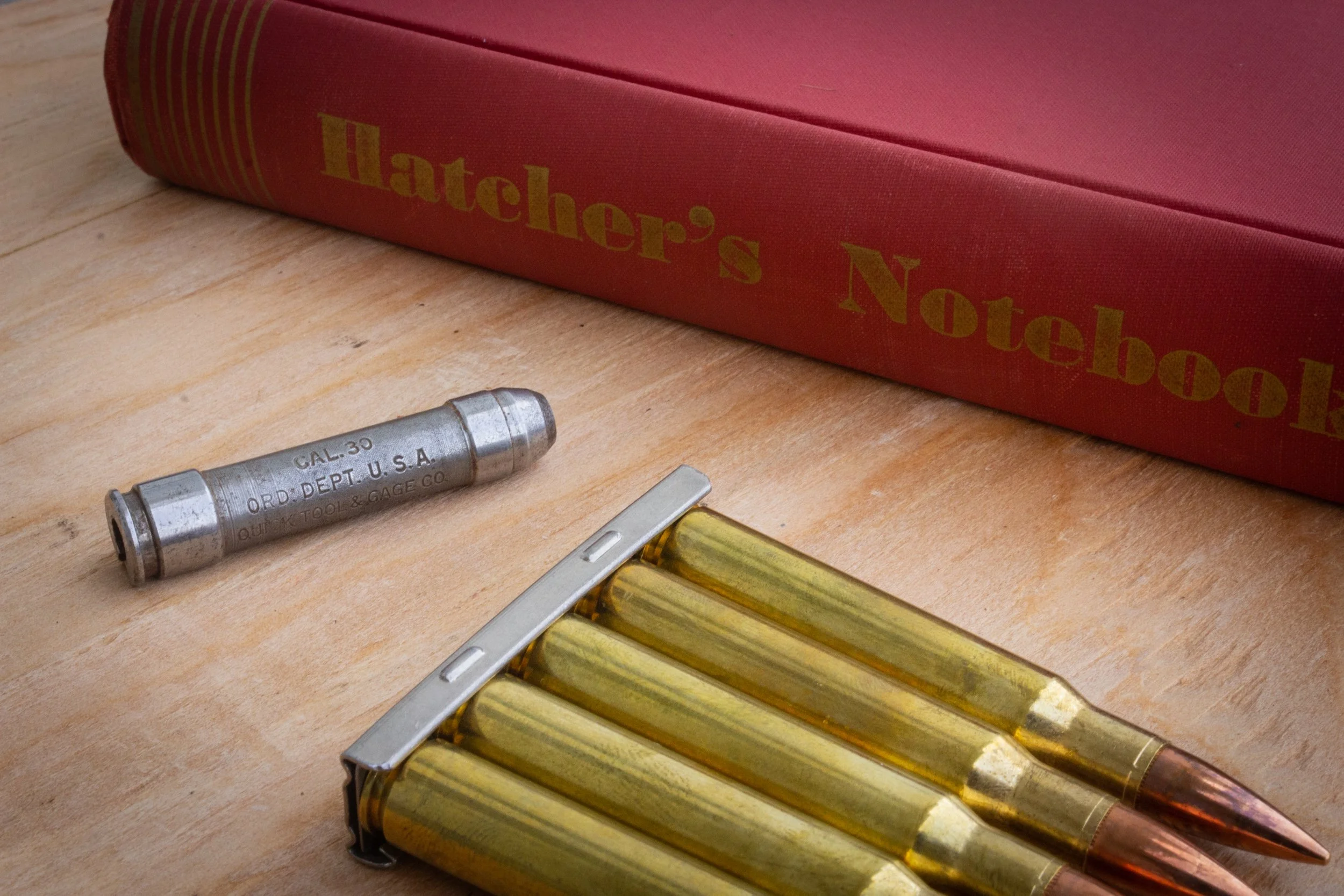
Reading does not replace doing. Books won’t build the rifle for you. They won’t polish the metal or cut the dovetail. But they will help you understand why something is done a certain way. They will keep you from repeating avoidable mistakes. They will make you more deliberate.
I am not the best gunsmith out there, and I won’t pretend to be. But every job that comes across my bench is approached with the intention of understanding it fully not just completing it. Gunsmithing is a trade passed hand to hand. Books are part of that chain. If we don’t preserve the knowledge, we lose it.
If you’re serious about the craft, start building your own library. Even one book at a time is enough. Just start.
Written by: Kurt Martonik
Kurt is a Gunsmith, Reloader, Hunter, and Outdoorsman. He grew up in Elk County, Pennsylvania, where he became obsessed with the world of firearms. Following high school, Kurt enlisted in the United States Air Force as a Boom Operator, where he eventually rose to the position of Instructor. After his military service, he attended the Colorado School of Trades(CST) in Lakewood, CO for gunsmithing. Following graduation, he accepted a job at C. Sharps Arms in Montana, where he worked as a full time stockmaker and gunsmith. He now owns and operates Highland Custom LLC. See full bio here.
