
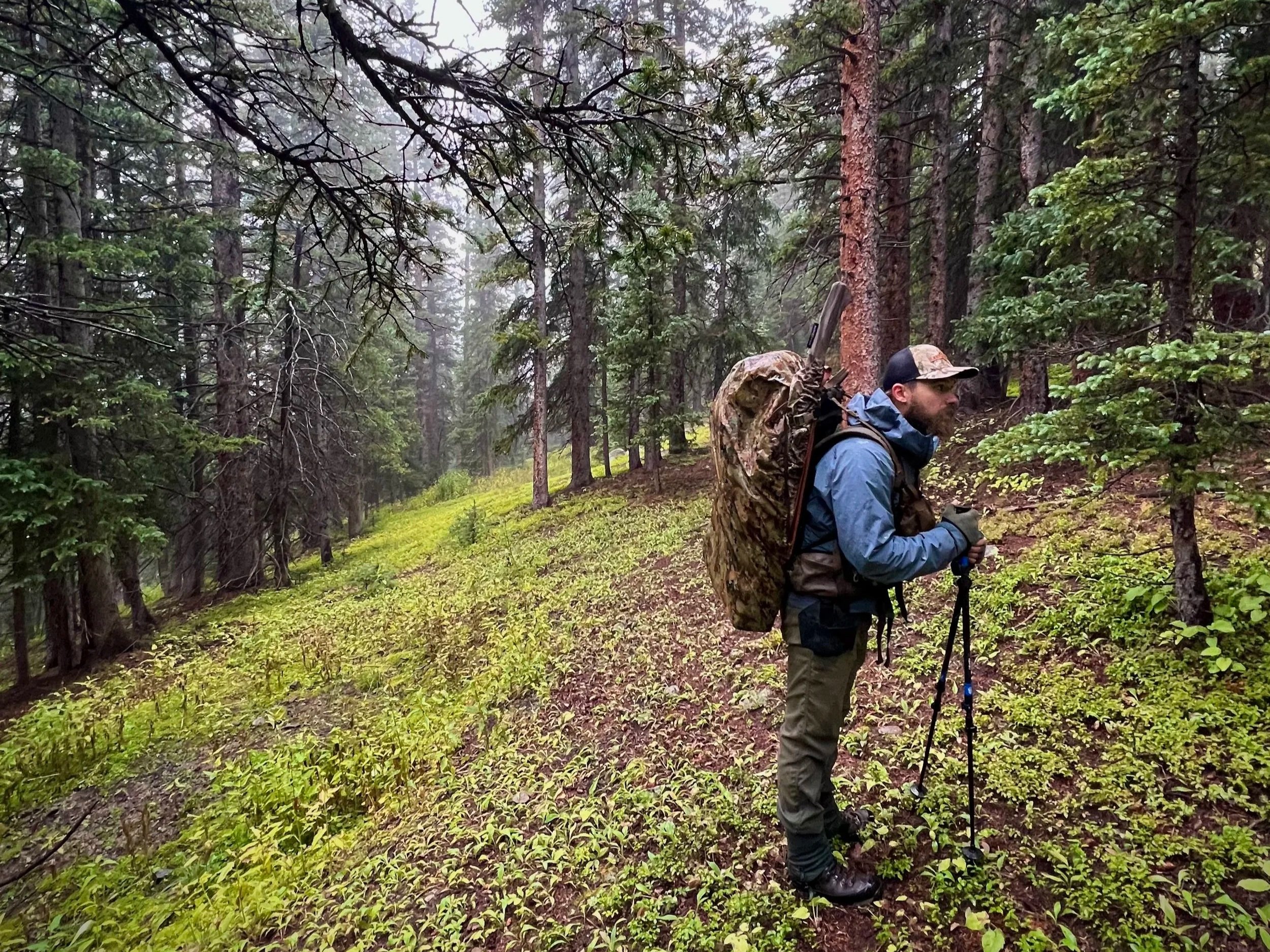
Moving camp up the mountain on a wet Ewe Sheep hunt in Colorado
These posts are written by me, not AI. Unless otherwise stated, all pictures were taken by me as well. Please enjoy.
A look at what I’d change on my G33/40 after carrying it over 1,000 miles while hunting
Over the past four years, I’ve carried my custom-built G33/40 just about everywhere I’ve gone. Chambered in the timeless .270 Winchester, it’s been with me across the plains and mountains of Montana chasing pronghorn antelope, mule deer, and elk. It’s climbed past 13,000 feet in the high country of Colorado during a bighorn sheep ewe hunt. It’s pushed through Pennsylvania clearcuts and steep hardwood hills in pursuit of whitetail deer and black bear. And most recently, it’s been dragged through the thick, unforgiving forests of eastern Canada while hunting Canadian moose.
On that last hunt, somewhere between the brush, the miles, and the hours alone in my own head, it finally hit me, I’ve carried this rifle on foot for well over 1,000 miles. At this point, I know it the way you know a good pair of boots. Every ding and dent has a memory attached to it. The weight, the balance, the way it carries in the hand, none of it is theoretical anymore. The excitement of taking it afield hasn’t faded, not even a little. I still look forward to slinging it over my shoulder every time I head out the door.
That said, there are a few things I’d do differently if I were building this rifle again today. These aren’t conclusions drawn at the bench or ideas pulled from a spec sheet, they’re lessons I learned one step at a time, with the rifle in my hands. You may not agree with all of them, and that’s fine. But they’re the same considerations that now shape how I think through a custom build when a customer asks for a rifle meant to be carried, not just looked at.
Some of the links on this site are affiliate links, which means I may earn a small commission if you choose to make a purchase—at no additional cost to you. This has no impact on what I write about or the opinions I share, as everything here is based on real use and time in the field. I only include links when I believe they genuinely add value or help the reader, and I won’t recommend or link to anything I wouldn’t use myself.
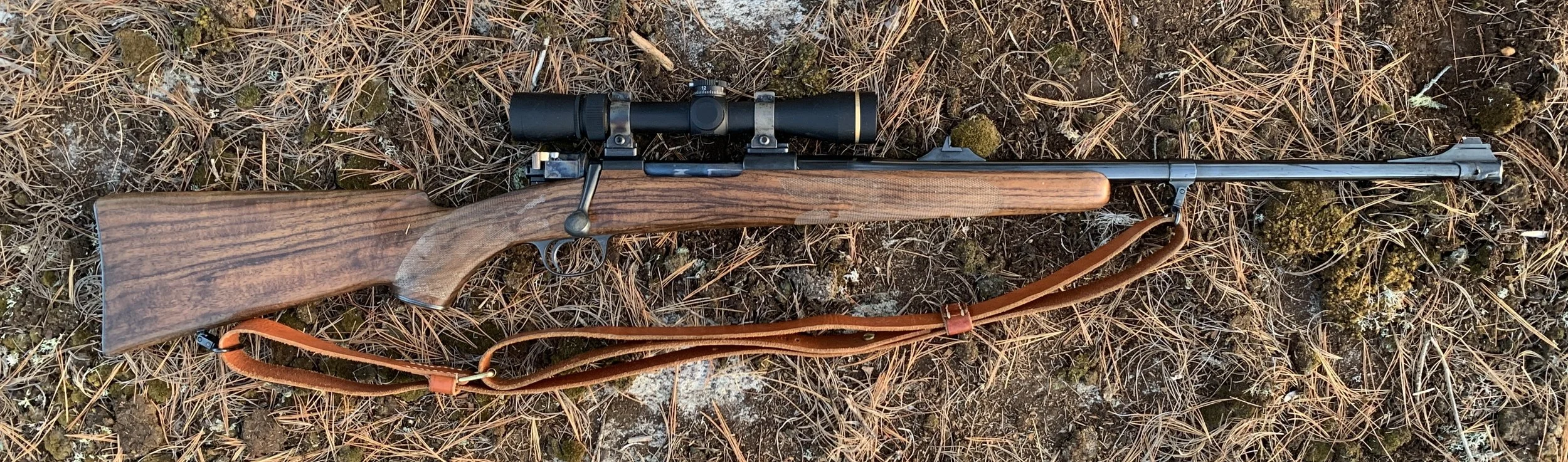
My G33/40 in Quebec on a Moose hunt
What I Wouldn’t Change
Before getting into what I’d do differently, it’s worth starting with what I wouldn’t change at all. There are a few decisions in this build that proved themselves time and again in the field. While they won’t apply to every rifle or every hunter, they absolutely influence how I think through a build when working with a customer.
From the beginning, this rifle was built with one guiding idea in mind: it needed to be capable of hunting anything in North America if required. When you set a requirement that broad, you have to accept that not every component will be perfect for every scenario. There are always trade-offs; cartridge choice, optic selection, weight versus durability, but those compromises were intentional, and in practice, they worked.
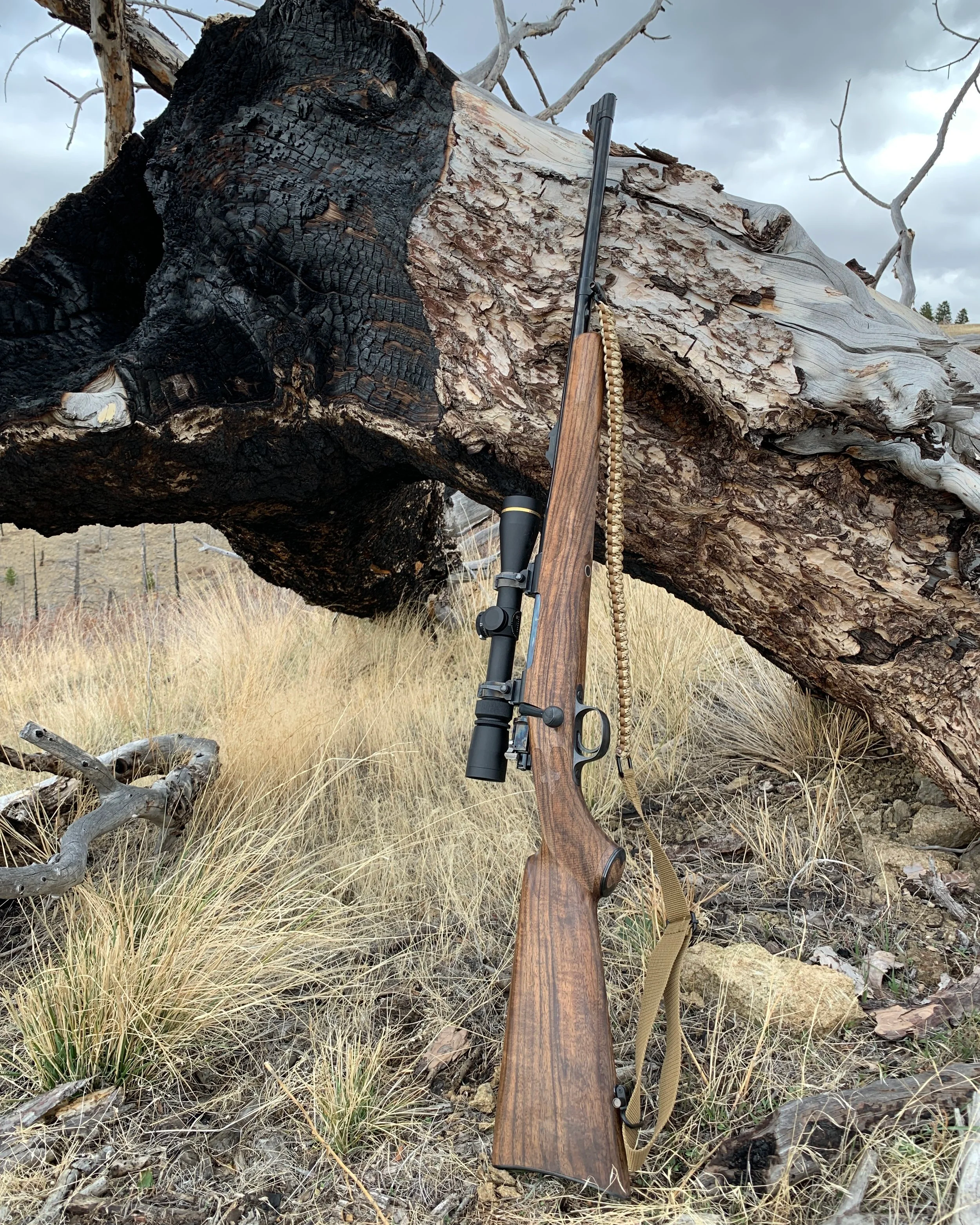
The G33/40 action is everything I could have asked for in a rifle action. It’s a small-ring 98 Mauser originally built for German mountain troops during World War II, and weight reduction was clearly a priority in its design. Every effort was made to lighten the action while retaining the strength and reliability the Mauser system is known for. It checks all the boxes I look for in a working rifle action, including true controlled-round feed. Beyond function, it also checked a personal box for me, it was built in 1940, and there’s something undeniably appealing about carrying a piece of history that’s still doing exactly what it was designed to do.
That said, I don’t recommend starting with an unaltered example today. These actions have become rare collector’s items, and rightfully so. If you’re considering one for a project, it’s best to find an already sporterized action, as I did, and give it a second life in the field rather than pulling an original out of circulation.
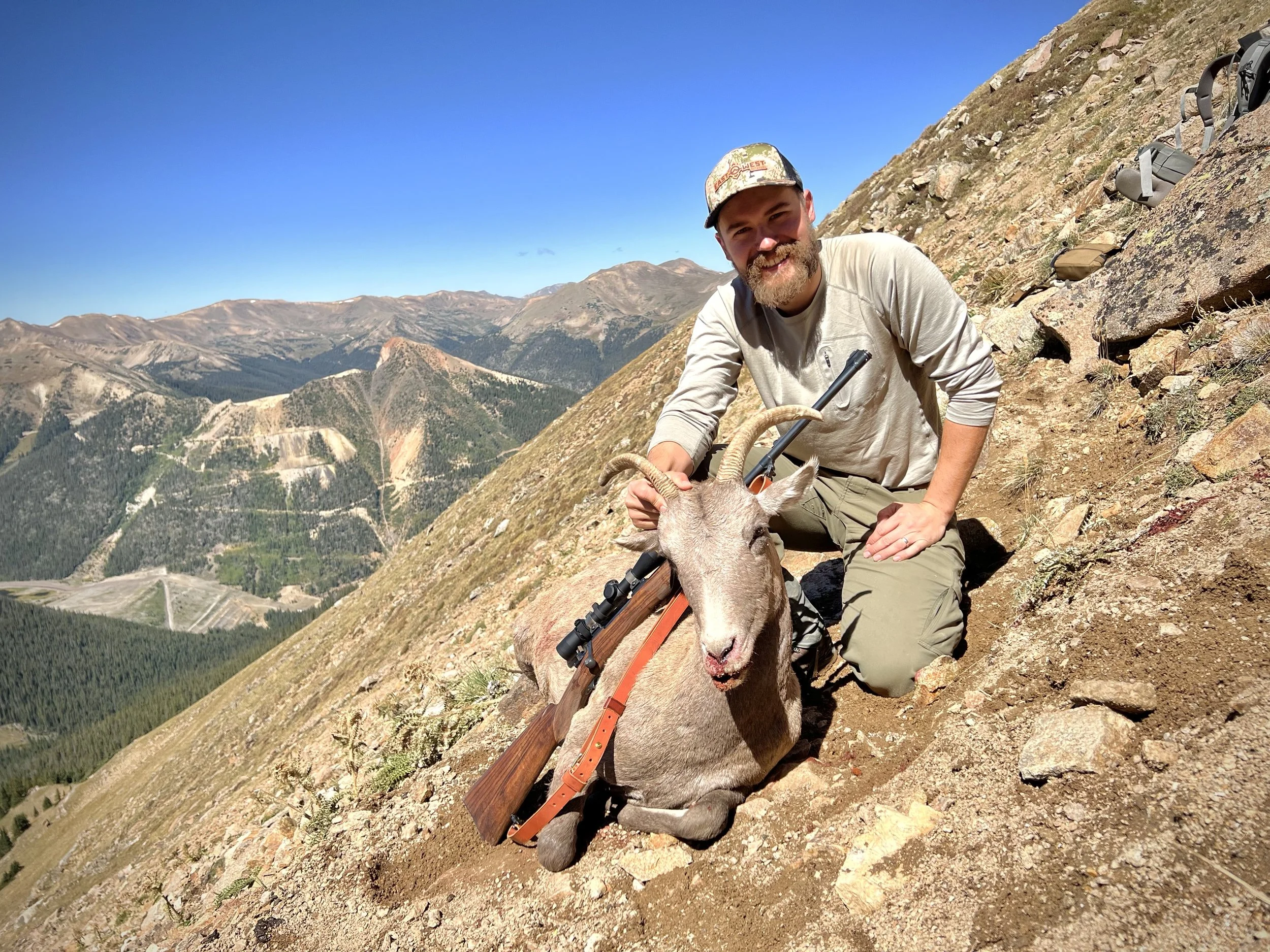
Finding success on a Colorado Ewe hunt after descending on a stalk from 13,200 ft
The barrel and .270 Winchester cartridge were a perfect match for this build. The rifle wears a 22-inch barrel, and that length proved itself in every scenario I put it through. It was long enough to reliably push the .270 to around 3,100 fps, and just as importantly, it balanced the rifle exactly where I wanted it. Nothing about it ever felt awkward or muzzle-heavy, whether I was climbing, side-hilling, or carrying it slung for long stretches.
I went with a #2 contour McGowan barrel, and it delivered excellent results from the bench. It consistently shot ¾-inch groups at 100 yards and, on many occasions, held groups under ½ inch. From a practical standpoint, it did everything I asked of it. That said, after carrying the rifle as much as I have, I can’t help but wonder how a Winchester Featherweight profile would look and feel on this build. Dropping nearly eight ounces off the rifle is tempting, especially for something that is carried more than shot. That curiosity aside, this contour has been hard to fault.
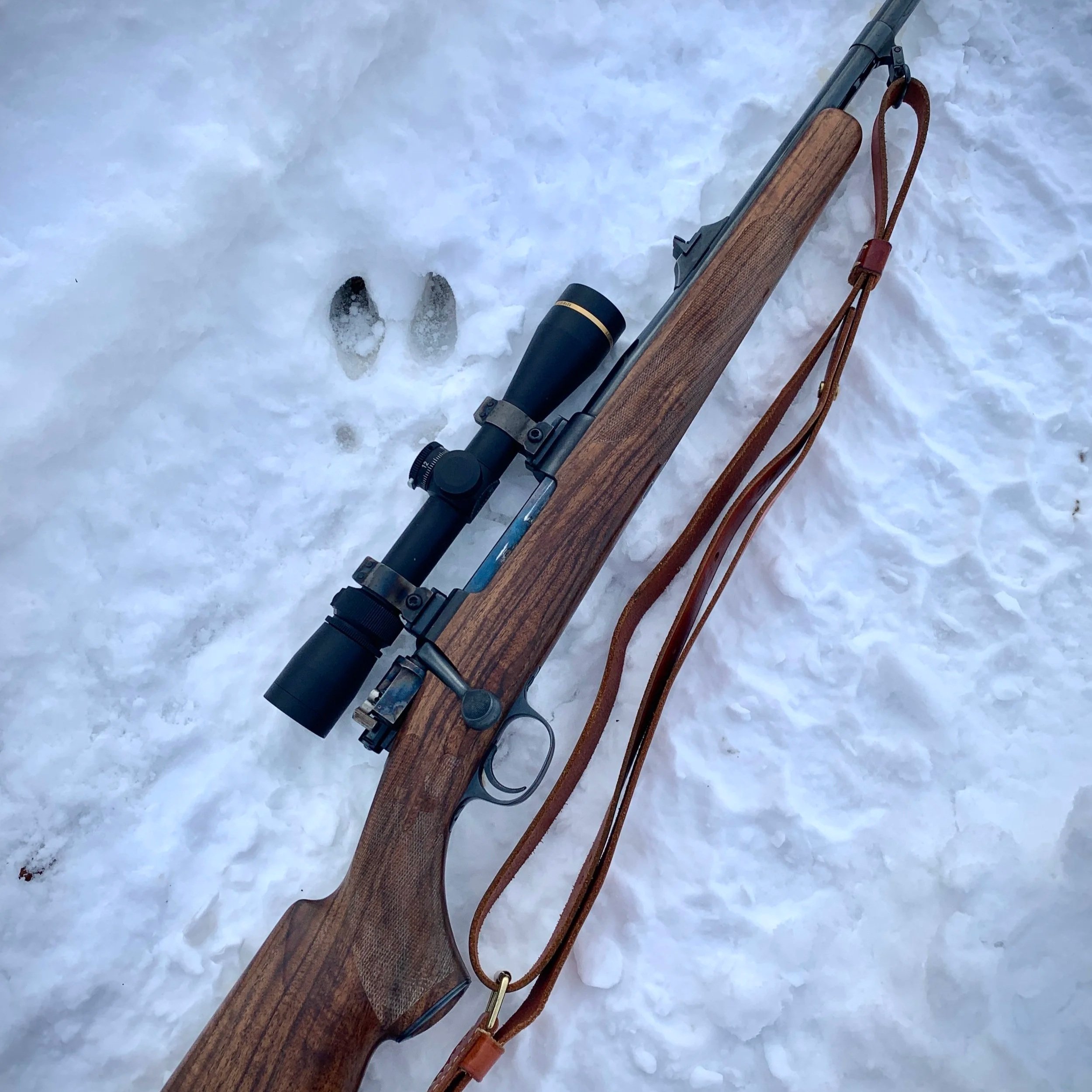
As for the cartridge itself, I never once felt under-gunned with the timeless .270 Winchester and the right bullet. From open country to timber, it handled everything I asked of it. If I did my part, the cartridge did its job cleanly and consistently.
A three-position, side-swing safety is an absolute must for me, and this build only reinforced that belief. If I had my way, every factory rifle would come with one. It’s quick to operate when the moment matters, and just as important, it allows the rifle to be unloaded while remaining on safe.
Many people overlook the value of the third position that locks the bolt closed, but time in the field makes its importance obvious. With a rifle slung, it doesn’t take much for a branch to catch the bolt handle and crack it open. This can happen carrying on either shoulder, but it’s most common when the rifle is slung on your weak side with a pack on. My wife has lost more than a few cartridges from her Remington Model Seven this way, which is why it now wears a bolt-shroud, three-position safety as well.
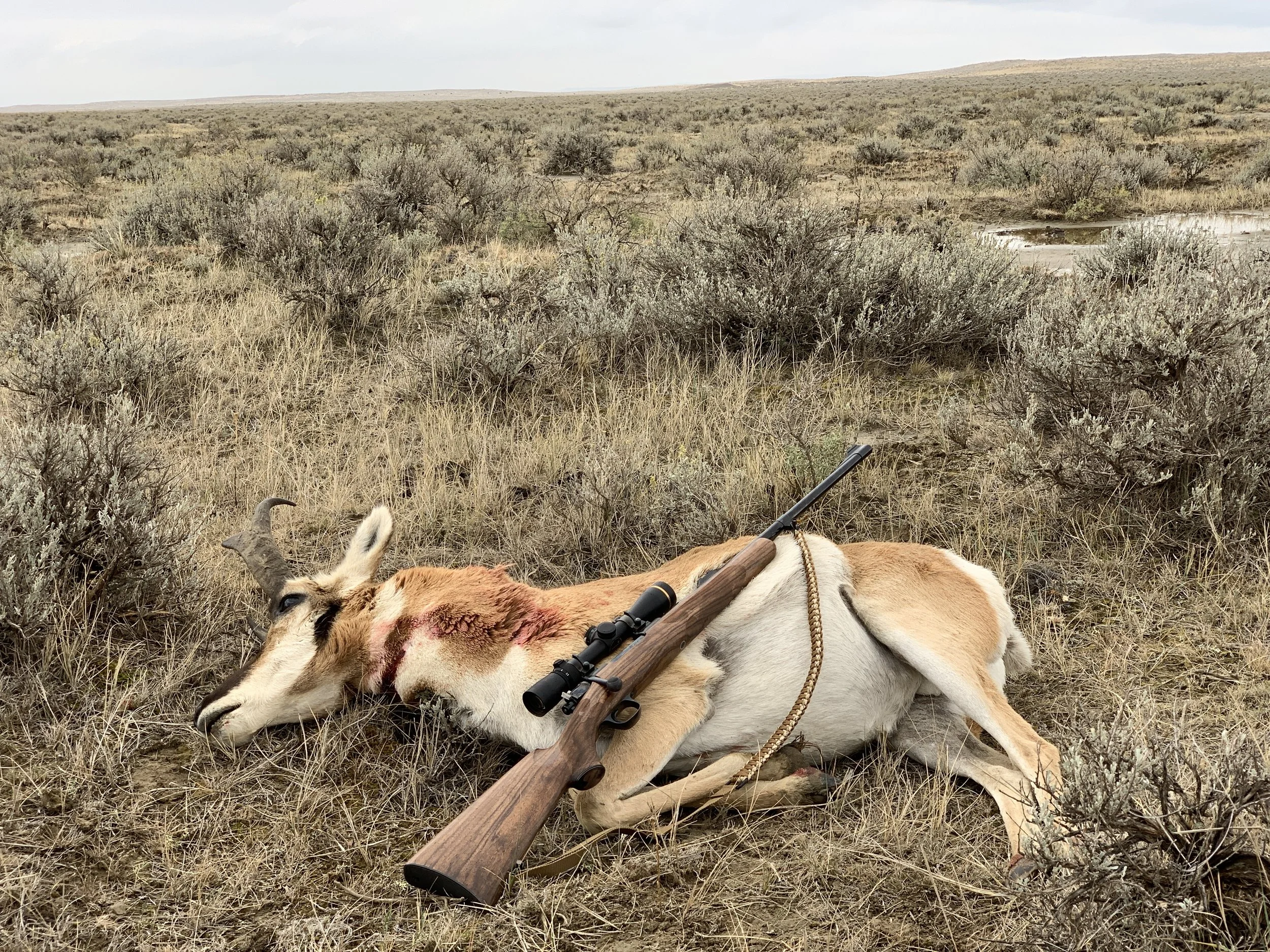
The first Pronghorn Antelope taken by my G33/40
I don’t have enough good things to say about the Leupold VX-3HD 2.5–8×36mm scope. It’s exceptionally lightweight and incredibly durable, never once losing zero over the four years I’ve carried it. The only time I wished for a bit more magnification was while antelope hunting in wide-open country but even then, I made it work.
On the low end, the 2.5× setting was perfect for close-in brush work and allowed for fast, instinctive shots when things happened quickly. The “small by today’s standards” 36mm objective lens still brought in plenty of light during late evenings, and I never felt handicapped by it in real hunting conditions.
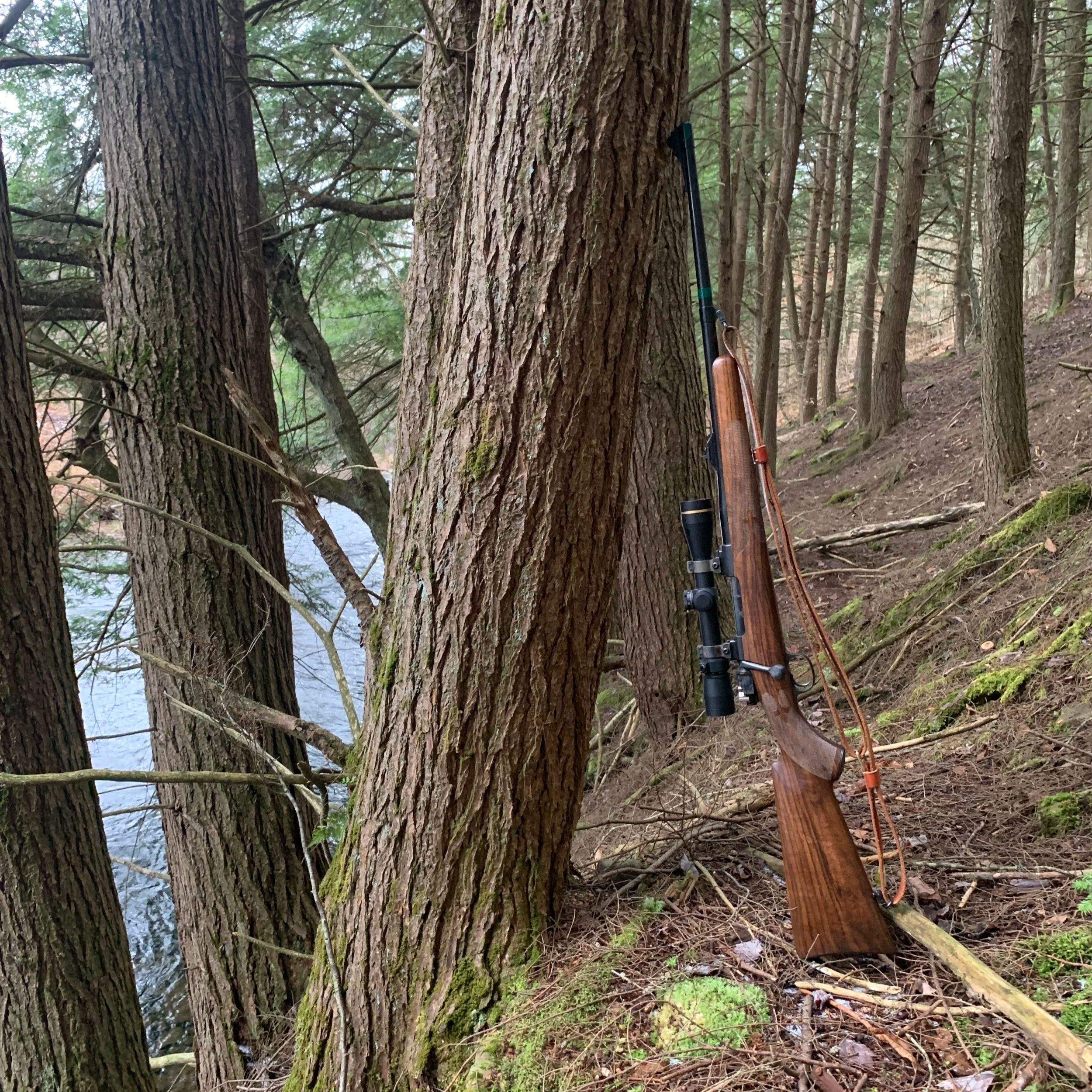
Lastly, the sling. While it’s not directly part of the rifle build itself, I was so happy with it that I couldn’t help but include it here. The Brownells Latigo sling may be the most well-thought-out hunting rifle sling I’ve ever used. It’s simple, intuitive, and adjusts incredibly fast.
The sling allows you to carry the rifle comfortably over your shoulder, then quickly cinch it tight to the stock so it doesn’t snag on brush while moving through the field. Field adjustability is probably unfamiliar to many hunters, but once you’ve used it, you never want to go back. The biggest downside to this sling is that Brownells almost never seems to have them in stock.
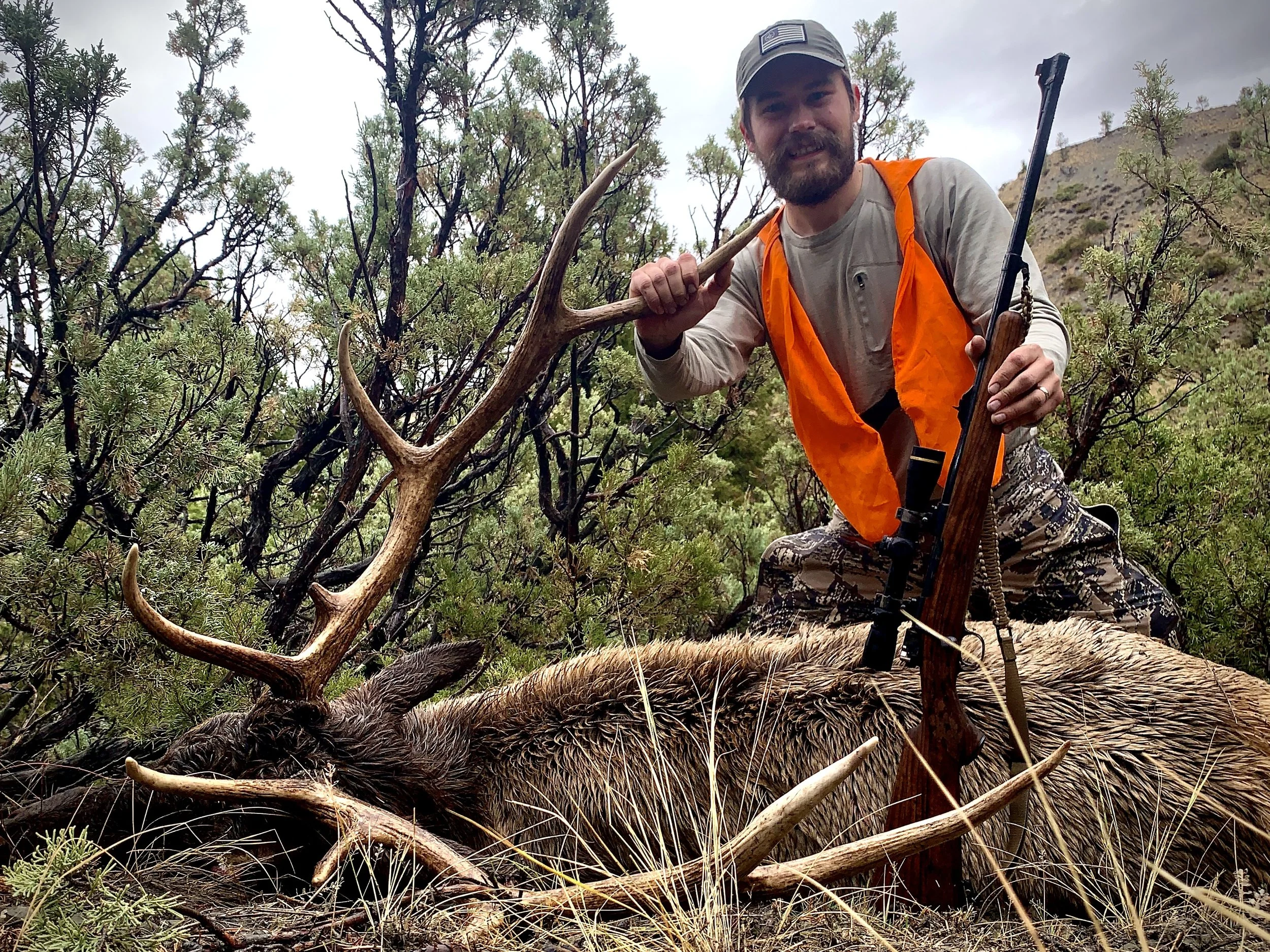
My first bull elk, taken solo on a very rainy day in Montana
What I Would Do Differently
As much as I like everything about this rifle, time in the field made it clear that there are a few things I’d do differently if I were starting from scratch. Almost all of these choices were originally driven by aesthetics rather than function, as I’ll explain below.
Barrel-mounted sling swivels absolutely have their place. On this rifle, however, I’d opt for stock-mounted swivels instead. While the banded, soldered-on style looks great and I won’t pretend that wasn’t the reason I chose to go that route, the practicality just isn’t there for this application.
Typically, barrel-mounted swivels are used on heavier-recoiling rifles to prevent the stud from cutting into your hand under recoil. The .270 doesn’t recoil hard enough to justify that. The upside is that the rifle carries slightly lower through brush, but the downsides outweigh it for me. Most importantly, you lose the ability to use the sling as a shooting aid, since any tension is applied directly to the barrel.
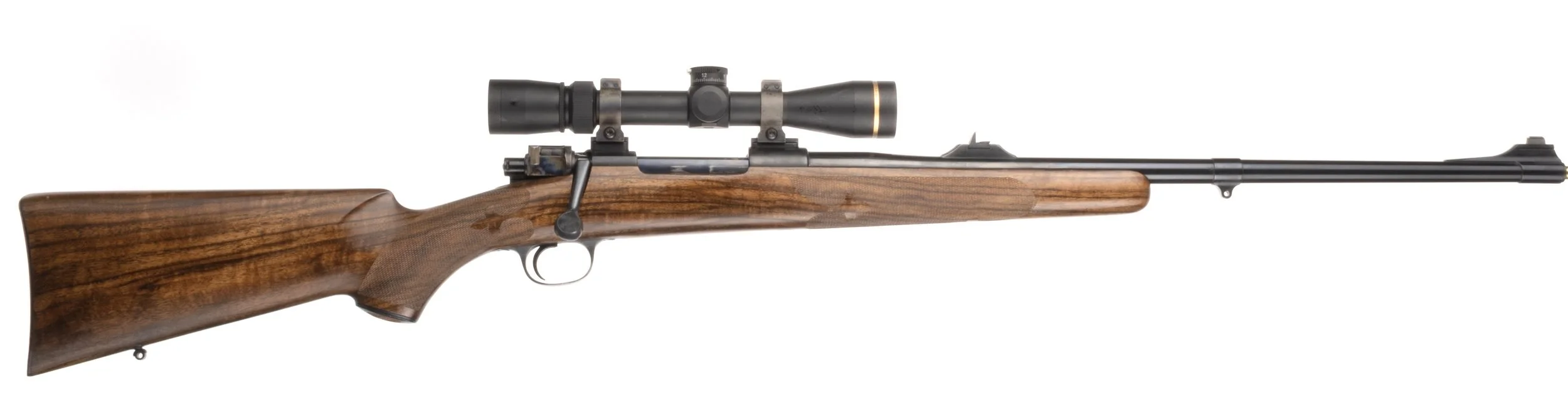
While this may be something of a lost art, knowing how to properly use a sling can dramatically steady offhand shooting. Nearly all of my shots on game with this rifle have been taken from a seated position, braced with knees and elbows. Being able to add sling tension would have been a real advantage.
Additionally, the placement of the front swivel made the rifle uncomfortable to carry slung over the shoulder. It pulled the nose of the fore-end into my back, which was uncomfortable in anything but the heaviest clothing.
The metal buttplate is another classic choice, and like most things, it comes with trade-offs. From an aesthetic standpoint, I love them. They help keep a rifle looking timeless. They’re also surprisingly useful in steep terrain, planting the buttplate into the ground and using it briefly as a makeshift trekking pole can be a lifesaver when you need it.
The downsides are obvious. Steel does nothing to reduce felt recoil, and metal buttplates are best reserved for truly low-recoiling rifles. While the .270 isn’t punishing by any means, after four or five shots, my shoulder is noticeably tender. That’s something I can live with on a hunting rifle, and when needed, a leather shoulder pad is an easy solution.
The real issue showed up when carrying the rifle with a frame pack. When hunting out West, I’m often wearing a pack while breaking down animals miles from the road. With the slick metal buttplate riding against the pack’s shoulder straps, the rifle tended to slide when bringing it up to the ready position. It took a few extra, critical moments to mount the rifle solidly. A recoil pad grips the 500D Cordura straps far better and stays where it should.
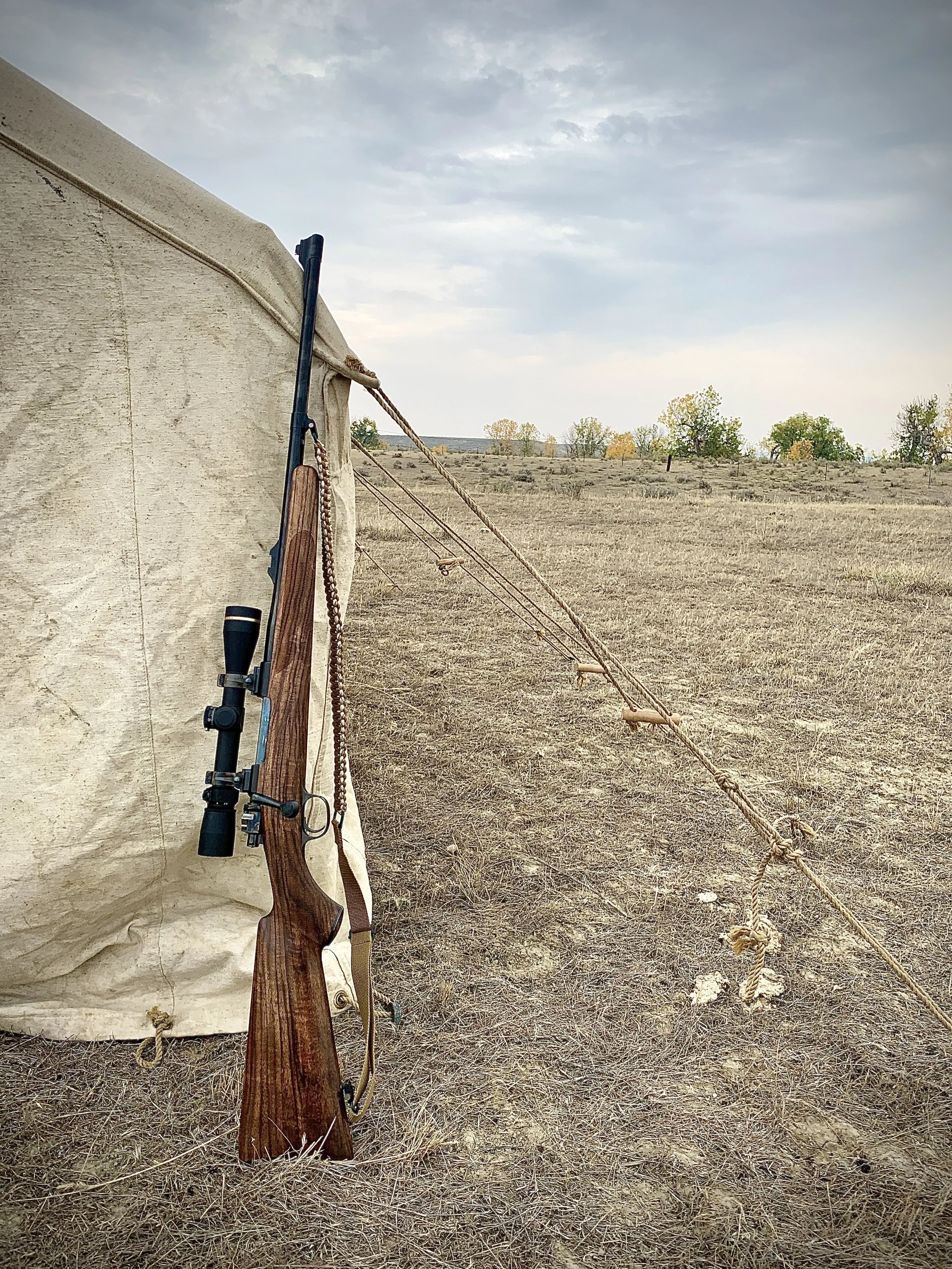
Antelope camp on the sage flats of Montana
The wood stock. I know what some of you are thinking, no, I’m not saying I’d switch to a synthetic stock on this build. The issue wasn’t the material; it was the blank, or more accurately, how I handled it.
This was the third rifle I ever built, and I ordered a beautiful French walnut blank from one of the major online suppliers. The grain structure was excellent. However, being relatively new to stock making at the time, I inlet the action directly into the blank before roughing it out. When I later cut the excess material off on the bandsaw, the fore-end immediately warped downward nearly a quarter inch as internal stresses were released. I hadn’t inlet the bottom metal yet so I corrected this by inletting the action further in the stock and leveling the top rails.
In hindsight, roughing out the blank before inletting would have completely avoided this problem. It also should have been an early warning sign of what was to come.
In wet conditions, the fore-end would shift noticeably—likely an indication that the blank had been kiln-dried rather than air-dried. The wood would swell just enough to contact the barrel, subtly shifting point of impact. I eventually corrected this by relieving the barrel channel an additional 0.015 inches.
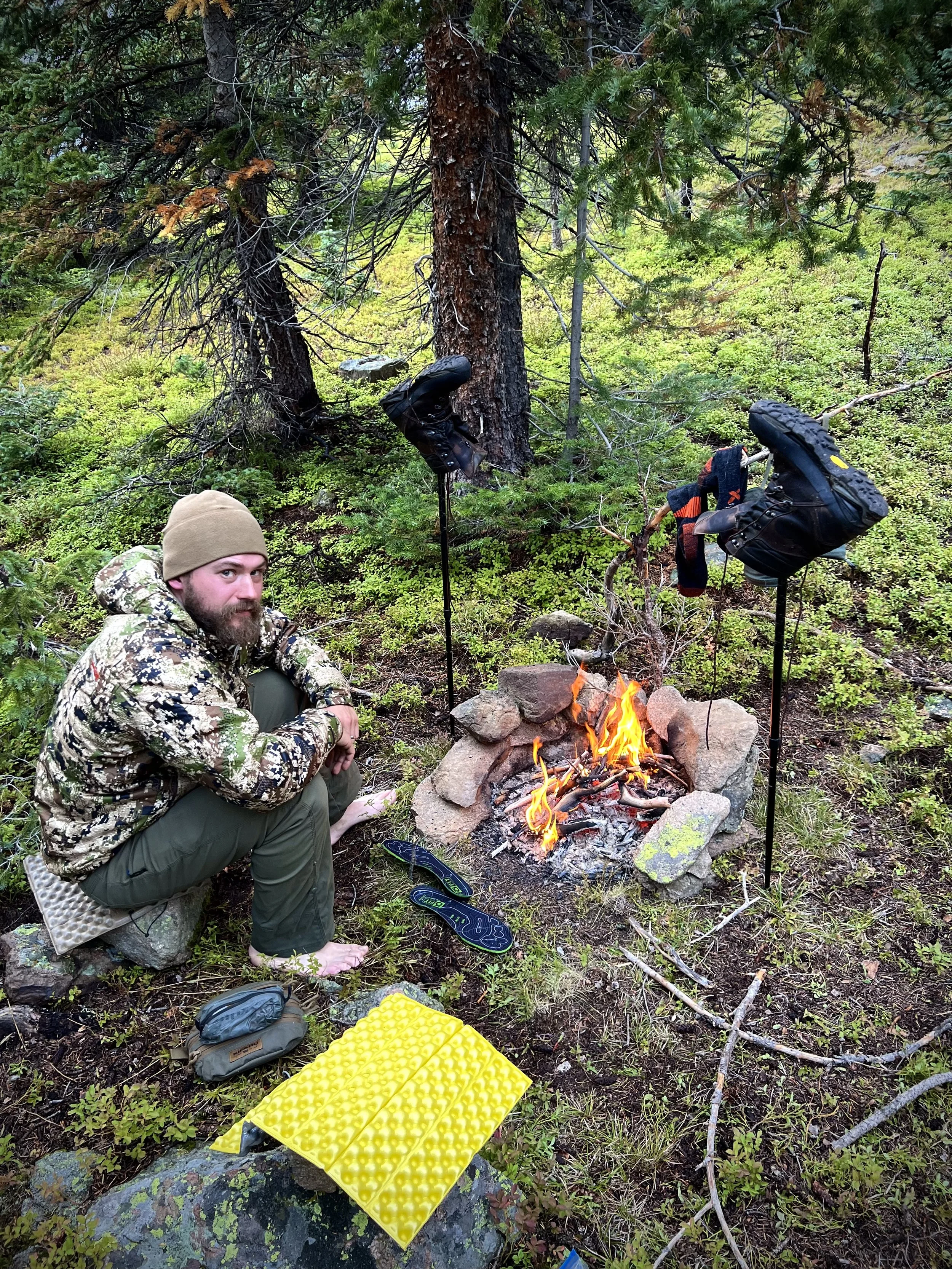
Drying out on my ewe hunt
On my bighorn sheep ewe hunt, we had days of steady rain leading up to the opener. Having backpacked in, there was no opportunity to dry the rifle out each night, and I found myself constantly checking the barrel channel, something I should never have to worry about in that environment. Long story short, I’d be far more selective with my stock blank on the next build.
The final lesson was weight. My original goal of building a sub–7-pound rifle without a scope was optimistic. The finished rifle ended up nearly a pound heavier. That extra mass makes for a comfortable shooter, but it’s not ideal for long miles on foot. Realistically, the only way I’d get closer to that original goal would be by changing the barrel contour or moving to a synthetic stock. That’s not a knock on this rifle, it’s simply a reminder that weight targets need to be realistic and aligned with how the rifle will actually be carried and used.
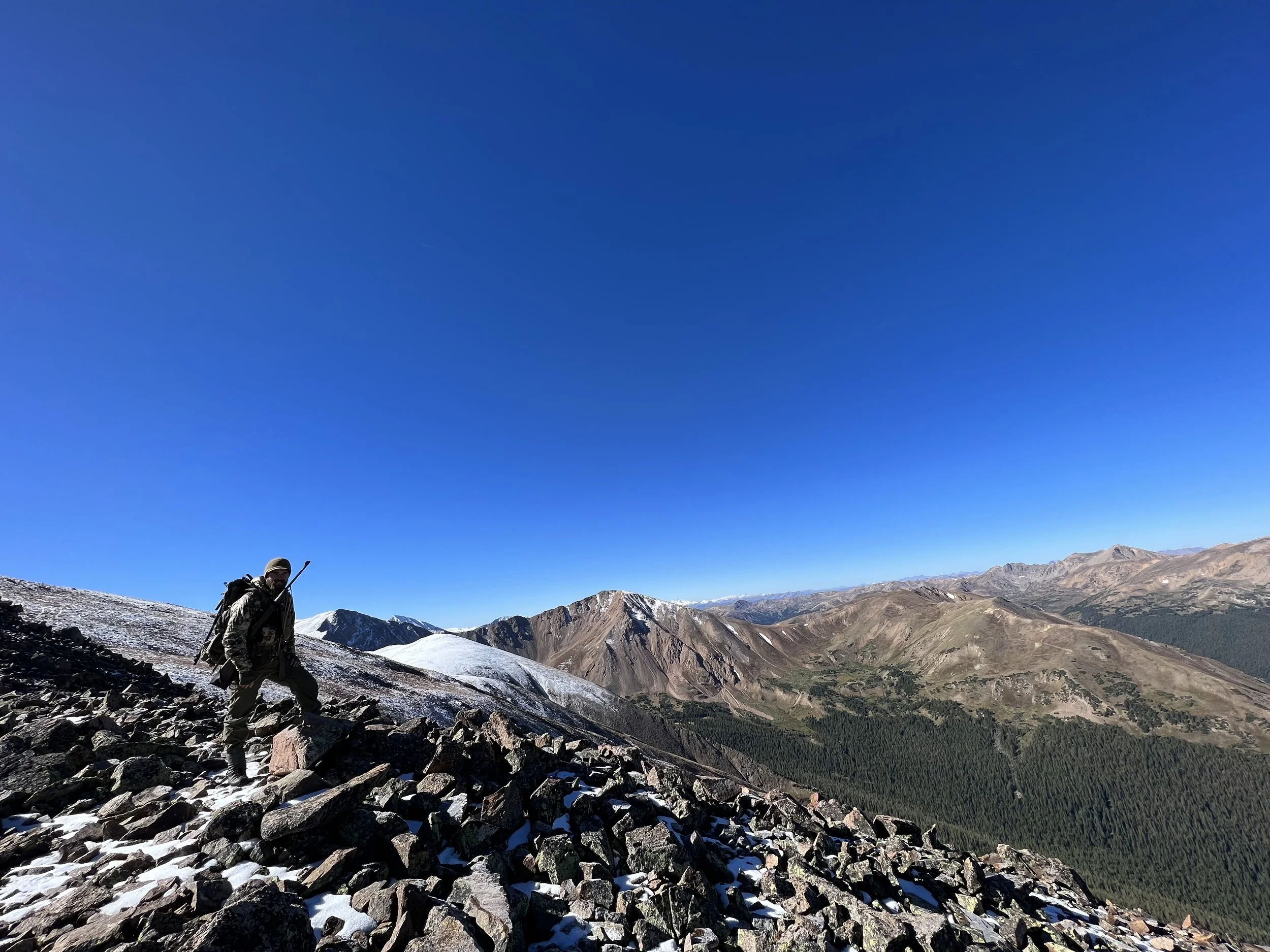
My G33/40s first trip over 13,000 ft, about to descend onto a band of ewes I glassed up that morning
I Could Go Either Way on These
These are the features I could take or leave. I didn’t dislike them, but I also didn’t see a significant advantage in most of the situations I encountered.
First are the iron sights. They look fantastic and, in my opinion, really make the rifle stand out. The soldered, banded front sight and leaf rear are true classics. From a practical standpoint, they serve as a backup if the scope were to fail.
I regulated them to my handloads, with the first leaf set at 100 yards and the second at my maximum point-blank range—roughly 270 yards. Having that peace of mind in the field was reassuring. If I fell on the rifle or damaged the scope, I could remove it and continue hunting with irons. I’m very comfortable hunting with iron sights and make a point to take a deer or two each year using them.
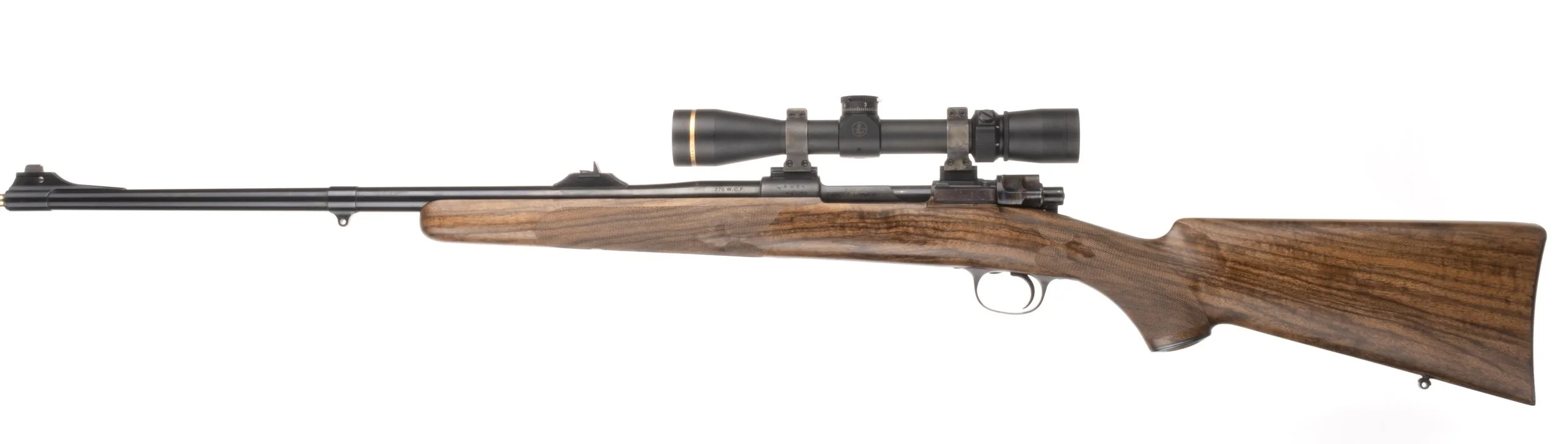
Where they start to fall short for me is usability.
When building a stock, the comb height is set to place your eye naturally in line with the sights. The issue is that iron sights sit much lower to the bore than a scope. A stock built to fit a scoped rifle makes it awkward to drop your head low enough to pick up the irons quickly. Going the other direction—setting the comb height for irons—often leaves your cheek lifted off the stock and your neck stretched when shooting with a scope. Neither option is particularly comfortable, and it’s a compromise that’s hard to fully solve. These are things worth thinking through during a build.
The blind magazine is the other feature I could go either way on. I chose it primarily to slim up the action area of the rifle, with the added benefit of saving an ounce or two. A trimmer action makes the rifle noticeably more comfortable to carry, especially one-handed. Being able to wrap your hand naturally around the action reduces fatigue when pushing through brush, something I do often, and in that role, it performed very well.
The downside is unloading. Running every cartridge out of the magazine one at a time is slower, and this is where a hinged floorplate really shines. That drawback wasn’t much of an issue during long, all-day or multi-day hunts out West in places like Colorado and Montana. It became more noticeable after moving back to Pennsylvania, where bouncing between spots and unloading more frequently is the norm.
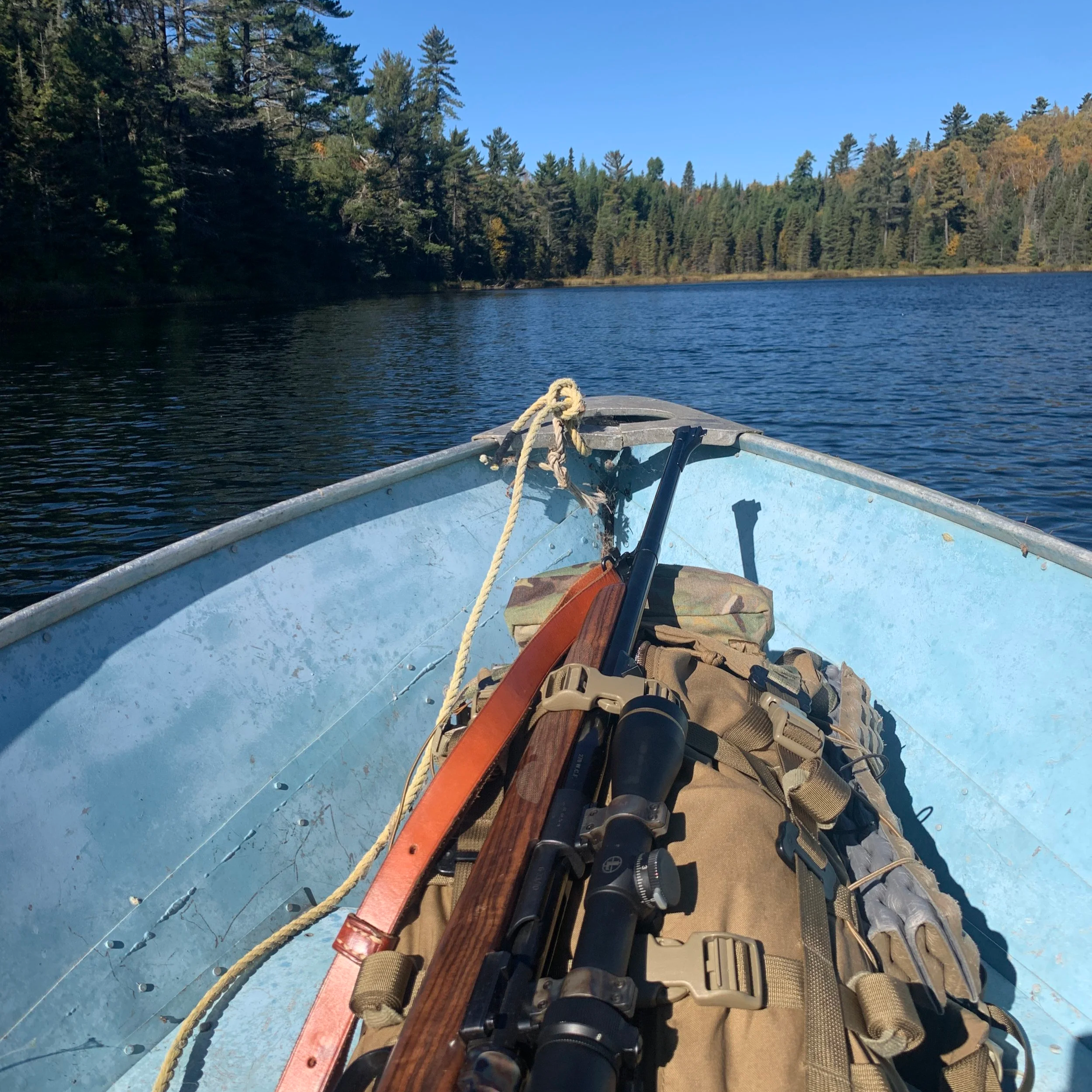
Searching for Moose on a remote Canadian lake
Where Does This Lead?
This idea first took shape on my moose hunt in Quebec. I found myself mentally working through my next personal build. I wanted something more bombproof, a synthetic option in the safe. With a caribou hunt in Alaska on the calendar and wet weather almost guaranteed, the last thing I wanted to worry about was a stock swelling, shifting, or getting beaten up in the Alaskan bush.
I wanted a rifle I could be harder on without babying it. Something that could reach a little farther if needed, shave some weight where it mattered, and land closer to that 7–7.5 pound range. More importantly, I want this rifle to be reproducible and reasonably attainable for anyone who wants something similar. This thought experiment is still evolving, but it’s already shaping into something I eventually plan to offer to my customers. The goal is simple: to build one rifle an outdoorsman can truly rely on.
A rifle that can be taken anywhere in North America and trusted to shoot where it’s aimed. Weatherproof and modern, but still carrying classic lines. A rifle that can be handed down to a kid, knowing that if they decide they never want another rifle, they won’t need one because this one will do everything asked of it.
A rifle that gathers miles, memories, and stories along the way.
Written by: Kurt Martonik
Kurt is a Gunsmith, Reloader, Hunter, and Outdoorsman. He grew up in Elk County, Pennsylvania, where he became obsessed with the world of firearms. Following high school, Kurt enlisted in the United States Air Force as a Boom Operator, where he eventually rose to the position of Instructor. After his military service, he attended the Colorado School of Trades(CST) in Lakewood, CO for gunsmithing. Following graduation, he accepted a job at C. Sharps Arms in Montana, where he worked as a full time stockmaker and gunsmith. He now owns and operates Highland Custom LLC. See full bio here.
